Rental Application     Tenant Login     Market Updates     Call Us:   702-376-7379


Category Archive : Property Management

Homebuyers

Monthly Las Vegas Rental Report: How Much Can Landlords Expect for Rent? (May 2026)

LAS VEGAS, NV – The latest rental market figures for May 2026 show that the Las Vegas Valley rental market remains active, with average lease pricing moving higher even as renters continue to gain additional choices throughout Southern Nevada.

According to newly released data from Las Vegas REALTORS®, the average price of residential rental units leased in Southern Nevada reached approximately $2,284 per month in April 2026, representing a 7.5 percent increase from the prior month and a 3.2 percent increase compared to one year ago. Meanwhile, the number of residential rental units leased declined modestly month-over-month to approximately 2,111 units, though activity remained slightly above year-ago levels.

At the same time, broader rental market data from Zumper places the median rent across all bedroom counts and property types in Las Vegas at approximately $1,890 per month as of May 2026. Zumper reports that rents in Las Vegas increased roughly 1 percent over the past month, while remaining slightly below year-ago levels.

What The May Numbers Show

Taken together, the latest figures suggest that the Las Vegas rental market is continuing to transition toward a more balanced environment in 2026. While MLS data shows average lease pricing moving upward during April, the increase in available rental inventory throughout the valley appears to be giving tenants greater flexibility when comparing properties and negotiating lease terms.

The latest MLS report also shows that the number of newly listed residential rental units increased to approximately 1,752 new listings in April, up 2.2 percent from the previous month. This ongoing rise in inventory is contributing to a more competitive landscape for landlords, particularly in areas where apartment construction and single-family rental availability have expanded.

By Bedroom And Property Type

While MLS figures primarily reflect overall leasing activity, apartment-specific data from Apartments.com continues to provide additional insight into pricing trends by unit size across the Las Vegas market.

As of May 2026:

  • Studios average roughly $994 per month
  • One-bedroom apartments average approximately $1,281
  • Two-bedroom units average around $1,542
  • Three-bedroom apartments average approximately $1,853

These figures continue to highlight the pricing gap between entry-level apartment units and larger rental homes or luxury properties throughout Southern Nevada. Single-family residences and newer suburban communities generally command significantly higher rents, particularly when offering upgraded interiors, larger floor plans, or desirable amenities.

Month-Over-Month And Year-Over-Year Trends

From a month-to-month perspective, the Las Vegas rental market showed mixed movement during April. MLS data indicates that average leased rental pricing increased sharply from March levels, while the number of completed lease transactions declined modestly. At the same time, median rental pricing remained relatively stable at approximately $2,000 per month, suggesting that higher-end properties may have contributed disproportionately to the increase in average pricing.

Meanwhile, Zumper’s broader citywide data suggests that overall rental pricing in Las Vegas continues to remain relatively stable compared to national trends, with rents still below the national median despite modest monthly increases.

What This Means For Las Vegas Homeowners

For homeowners considering renting out a property in 2026, the May data points to a market that remains healthy but increasingly competitive. Properties that are properly priced, well-maintained, and located in desirable neighborhoods continue to attract tenant interest throughout the valley. However, with more rental listings entering the market and renters gaining additional choices, pricing strategy has become increasingly important.

Homes priced too aggressively relative to nearby comparable properties may experience longer vacancy periods or require reductions before securing qualified tenants. For property owners unsure where their home fits relative to current market conditions, a free custom rental analysis based on neighborhood trends, property condition, size, and nearby comparable listings can often provide a more accurate estimate than broad regional averages alone.

Data sources: Las Vegas REALTORS® residential rental market data for Southern Nevada (April 2026) provided through LVRdata.com in partnership with Applied Analysis and SalesTraq. Additional rental market trends and pricing data from Zumper and Apartments.com.

Shelter Realty Property Management specializes in the areas of HendersonLas Vegas and North Las Vegas, NV. Feel free to give us a call at 702.376.7379 so we can answer any questions you may have.

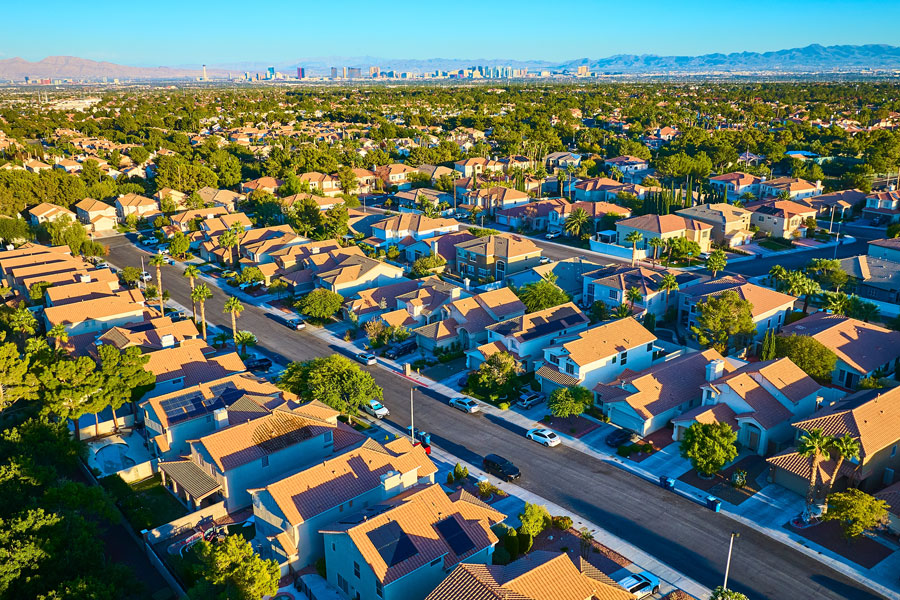
Aerial Suburban Las Vegas with Desert and Skyline at Sunset

More Rentals, More Choices: Las Vegas Inventory Surge Shifts Market Balance

LAS VEGAS, NV – A growing number of rental listings across Las Vegas are beginning to reshape the local housing landscape, giving tenants more choices while placing increased pressure on landlords to remain competitive.

New data and on-the-ground market activity suggest that rental inventory has expanded notably in recent months, contributing to a shift away from the tight, landlord-favored conditions that defined much of the post-pandemic period.

Inventory Growth Is Driving a Market Shift

According to our April 2026 Monthly Las Vegas Rental Report, the number of available rental units has been trending upward, even as leasing activity remains strong.

The report highlights a key dynamic:

  • More rental listings are entering the market
  • At the same time, tenant demand remains active
  • The result is a more balanced and competitive environment

Data from Las Vegas REALTORS® shows that while average rents declined modestly by 1.9 percent month-over-month and 4.0 percent year-over-year, the number of leased units actually increased during the same period. This combination points to a market where pricing adjustments and increased supply are helping to facilitate more transactions.

More Options for Renters

For tenants, the increase in inventory translates directly into greater flexibility. With more listings available across different property types and price points, renters are finding it easier to:

  • Compare properties
  • Negotiate lease terms
  • Secure housing without the urgency seen in previous years

Additional data from Zumper supports this trend, placing the median Las Vegas rent at approximately $1,810 per month as of April 2026, still below year-ago levels despite slight short-term fluctuations.

Why Inventory Is Increasing

Several factors appear to be contributing to the rise in available rental units:

  • New construction deliveries adding apartment supply to the market
  • Homeowners choosing to rent rather than sell amid higher interest rates
  • Regulatory shifts affecting short-term rentals, pushing some properties into the long-term market

Together, these influences are expanding the pool of available housing, particularly in suburban areas and newer developments.

What It Means for Property Owners

While demand for rental housing remains steady, the increase in supply is creating a more price-sensitive environment.

Property owners are now facing:

  • Greater competition from similar listings
  • Longer vacancy risks for overpriced units
  • Increased importance of presentation and marketing

As noted in the Shelter Realty Property Management April report, homes that are priced in line with current conditions and presented well continue to lease efficiently. However, those entering the market at aggressive price points may require adjustments to attract qualified tenants.

A More Balanced Market Emerges

The latest data suggests that the Las Vegas rental market is not weakening, but rather normalizing. After several years of rapid rent growth and limited availability, the current environment reflects a healthier balance between supply and demand. Renters are benefiting from increased choice, while landlords must adapt to a more competitive landscape. If current trends continue, this shift toward equilibrium could define the Las Vegas rental market throughout the remainder of 2026.

Data sources: Las Vegas REALTORS® MLS rental market data (March 2026), Zumper Las Vegas rent research (April 2026), and Shelter Realty April 2026 Rental Market Report.

Shelter Realty Property Management specializes in the areas of HendersonLas Vegas and North Las Vegas, NV. Feel free to give us a call at 702.376.7379 so we can answer any questions you may have.

Las Vegas, NV, USA – June 7, 2021: A view of a building at The GrandView Resort in Las Vegas, Nevada.

Monthly Las Vegas Rental Report: How Much Can Homeowners Expect for Rent? (April 2026)

LAS VEGAS, NV – The latest rental market figures for April 2026 show a market that remains active across the Las Vegas Valley, even as pricing continues to soften slightly. According to new data from the Las Vegas REALTORS® Multiple Listing Service (MLS), the average rent for residential units leased in Southern Nevada came in at approximately$2,125 per month in March, representing a 1.9 percent decrease from the prior month and a 4.0 percent decline compared to one year ago.

Meanwhile, Zumper’s latest data places the median rent across all bedroom counts and property types in Las Vegas at $1,810 per month, reflecting a slight increase over the past 30 days but still below year-ago levels and the national median, reinforcing Las Vegas’ position as a relatively affordable large metro rental market.

What the April numbers show

Taken together, these figures suggest that the Las Vegas rental market is experiencing a period of balance, where demand remains strong but pricing has not kept pace. MLS data shows that while average rents have declined modestly, the number of units leased increased significantly month-over-month, pointing to continued renter activity throughout the valley.

At the same time, the number of new rental listings has also increased, giving tenants more options and helping to keep upward pressure on rents in check. This combination of rising supply and strong leasing activity is contributing to a more competitive and normalized market environment compared to the rapid rent growth seen in prior years.

By bedroom and property type

While MLS data focuses on overall leasing activity, apartment-specific data from Apartments.com continues to provide insight into pricing by unit size across the Las Vegas market as of early 2026:

  • Studios average roughly $1,000 per month
  • One-bedroom apartments average about $1,285
  • Two-bedroom units average around $1,540
  • Three-bedroom apartments average approximately $1,850

These figures highlight the continued spread between smaller, entry-level rental units and larger homes or multi-bedroom properties. Single-family residences and newer construction properties in suburban areas typically command higher rents, particularly when offering upgraded interiors or desirable neighborhood amenities.

Month-over-month and year-over-year trends

From a month-to-month perspective, MLS data shows that the average rent declined by 1.9 percent from February to March, while the total number of leased units rose sharply, indicating that pricing adjustments may be helping to drive increased activity. Year-over-year, average rents are down approximately 4.0 percent, confirming that the market remains below the peak levels seen in early 2025.

Zumper’s data supports this trend, with the citywide median rent remaining below year-ago levels despite modest gains in recent weeks. Together, these indicators suggest that while demand remains steady, renters continue to benefit from increased inventory and more negotiating power than in previous years.

What this means for Las Vegas homeowners

For homeowners considering renting out a property in 2026, the April data points to a market that is active but price-sensitive. Properties are continuing to lease at a healthy pace, but achieving optimal pricing requires careful alignment with current market conditions.

Homes that are well-presented, competitively priced, and located in desirable areas are still attracting strong interest. However, with more listings entering the market and tenants having additional choices, properties priced too aggressively may experience longer vacancy periods or require reductions to secure a lease.

For property owners unsure where their home fits relative to current averages, a free custom rental analysis based on neighborhood, property size, condition, and nearby comparable listings can provide a more accurate estimate than broad market averages alone.

Data sources: Las Vegas REALTORS® MLS rental market data for Southern Nevada (March 2026), Zumper Las Vegas rent research (updated April 2026), and apartment rental trends from Apartments.com as of early 2026.

Shelter Realty Property Management specializes in the areas of Henderson, Las Vegas and North Las Vegas, NV. Feel free to give us a call at 702.376.7379 so we can answer any questions you may have.

Corporate Ownership of Las Vegas Homes as Lawmakers Revisit Housing

Tax Debate Targets Corporate Ownership of Las Vegas Homes as Lawmakers Revisit Housing Policy

LAS VEGAS, NV – A policy discussion taking shape in Nevada could have implications for how real estate investors structure property ownership in the Las Vegas housing market, as lawmakers examine whether a long-standing tax exemption should be revised or eliminated.

The issue centers on the growing share of homes owned by corporate entities and investment groups across Southern Nevada. Housing data referenced in multiple reports suggests that investors account for a notable portion of the region’s single-family housing stock, with estimates generally ranging from the mid-teens to around one-fifth of all homes.

Investor activity has also played a visible role in recent transaction trends. In certain periods over the past several years, analysts have found that investors represented a significant share of home purchases in the Las Vegas area, at times approaching a quarter or more of total sales volume. That level of participation has drawn attention from policymakers as affordability concerns continue across the region.

At the center of the current debate is a provision in Nevada’s tax structure that applies to certain real estate investment arrangements. According to regional reporting, some large property owners may be able to transfer or restructure holdings between affiliated entities without triggering the same level of tax exposure that would typically apply to traditional real estate transactions.

Lawmakers are now evaluating whether that framework should be adjusted. Proposals under discussion have focused on closing or narrowing the exemption, which could increase tax obligations tied to certain property transfers and generate additional public revenue.

Supporters of revisiting the policy argue that changes could help fund programs tied to housing and education, while also increasing transparency around large-scale property ownership. Others caution that any revisions must be carefully structured to avoid unintended consequences across the broader real estate market, including impacts on transaction flow, financing, and smaller-scale investors who may use similar ownership structures.

The discussion is unfolding at a time when Southern Nevada continues to face housing supply constraints. Federal and state estimates have pointed to a sizable shortfall in available affordable housing units, while elevated home prices and borrowing costs have made entry into homeownership more challenging for many residents.

At the same time, demand for rental housing remains strong, supported by ongoing population growth and economic activity in the Las Vegas Valley. That dynamic has contributed to continued investor interest in the market, particularly among those focused on long-term rental strategies.

Previous legislative efforts in Nevada have included a 2023 proposal to cap the number of homes large corporate investors could purchase annually, though the measure ultimately failed to advance amid legal and economic concerns. Lawmakers have also supported efforts to increase transparency around institutional ownership and bulk home purchases, reflecting ongoing interest in how investor activity is shaping the housing market.

Focusing on tax policy instead represents a more targeted approach, though its ultimate impact remains uncertain. Real estate analysts note that investors in the Las Vegas market range from large institutional firms to smaller local operators, and any changes to tax treatment would likely affect different groups in different ways depending on how properties are held and managed.

More broadly, housing experts continue to point out that investor activity is only one component of a larger set of market forces. Supply limitations, construction costs, migration patterns, and interest rates all play significant roles in shaping both home prices and rental demand.

As the legislative process moves forward, investors and property owners will be watching closely to see how any proposed changes are defined and implemented. While adjustments to the tax framework could influence how deals are structured, the overall direction of the Las Vegas housing market will likely continue to be driven by a combination of economic growth and ongoing supply challenges.

Shelter Realty Property Management specializes in the areas of  HendersonLas Vegas and North Las Vegas, NV. Feel free to give us a call at 702.376.7379 so we can answer any questions you may have.

Las Vegas Rental

Monthly Las Vegas Rental Report: How Much Can Homeowners Expect for Rent? (March 2026)

LAS VEGAS, NV – The latest rental market figures for March 2026 show that rents across the Las Vegas Valley are holding relatively steady as the spring leasing season begins. According to Zillow, the average rent for all bedrooms and all property types in Las Vegas currently stands at about $1,935 per month, representing an increase of roughly $40 month-over-month, though it remains about $60 lower than a year ago.

Meanwhile, Zumper’s latest data places the median rent across all bedroom counts and property types at $1,802 per month, approximately 3 percent lower year-over-year and about $98 below the national median, reinforcing Las Vegas’ position as a relatively affordable large metro rental market compared to many U.S. cities.

What the March numbers show

Taken together, these figures suggest that the Las Vegas rental market has largely stabilized following the gradual cooling that occurred throughout much of 2025. Zillow’s average rent figure holding near $1,940 indicates that advertised asking rents have leveled off rather than continuing the declines seen late last year.

At the same time, Zumper’s median rent of $1,802 shows that the broader market remains slightly softer compared to prior years, as tenants remain price-sensitive and new apartment supply continues to provide renters with more options across the valley.

By bedroom and property type

Public rental data continue to highlight differences between smaller apartment units and larger homes in the Las Vegas market. Apartment-focused data from Apartments.com shows that as of early 2026:

  • Studios average roughly $995 per month
  • One-bedroom apartments average about $1,280
  • Two-bedroom units average around $1,536
  • Three-bedroom apartments average approximately $1,840

These figures illustrate a clear spread between entry-level rental units and larger family-sized homes. Single-family houses and larger multi-bedroom properties in suburban areas often command significantly higher rents, especially in newer communities or neighborhoods with strong school districts.

Month-over-month and year-over-year trends

From a month-to-month perspective, the roughly $40 increase reported by Zillow suggests modest upward movement as the market moves toward the spring leasing season, which historically brings more activity from both renters and property owners.

On a yearly basis, however, rents remain below their levels from early 2025. Data from multiple rental platforms shows that the Las Vegas market has been gradually correcting from the rapid rent growth seen during the pandemic-era migration boom earlier in the decade.

What this means for Las Vegas homeowners

For homeowners considering renting out a property in 2026, the March data point to a market that is stable but competitive. Demand remains healthy, but renters are more cautious about price increases and often compare multiple listings before committing.

Well-maintained homes with updated interiors, strong curb appeal, and competitive pricing can still attract significant interest, particularly for properties offering extra space or desirable amenities such as garages, yards, or proximity to employment centers. However, properties priced too aggressively may sit on the market longer as tenants take advantage of increased inventory and negotiate more favorable terms.

For property owners unsure where their home fits relative to current averages, a free custom rental analysis based on neighborhood, property size, condition, and nearby comparable listings can provide a more accurate estimate than broad metro-wide averages alone.

Data sources: Zillow Las Vegas rental market trends (average rent for all bedrooms and property types, updated February 2026), Zumper Las Vegas rent research (median rent and bedroom-level averages, updated March 2026), and apartment rental trends from Apartments.com as of early 2026.

Shelter Realty Property Management specializes in the areas of  HendersonLas Vegas and North Las Vegas, NV. Feel free to give us a call at 702.376.7379 so we can answer any questions you may have.

Las Vegas Real Estate Sign Depicts Houses And Homes In Nevada. Property Purchases And Development Sales - 3d Illustration

Monthly Las Vegas Rental Report: How Much Can Homeowners Expect for Rent? (February 2026)

LAS VEGAS, NV – The latest rental market figures for February 2026 show relatively steady conditions in the Las Vegas Valley after a modest winter uptick. According to Zillow, the average rent for all bedrooms and all property types now sits at approximately $1,940 per month, roughly $25 higher month-over-month but still about $60 below year-ago levels. Meanwhile, Zumper’s median rent across all bedroom counts remains near $1,795 per month, reflecting a market that is broadly stable with only modest movement in the last 30 days.

What the February numbers show

Taken together, these indicators suggest that Las Vegas rental pricing has largely leveled off as winter turns to spring rather than seeing broad acceleration or sharp declines in asking rents. Zillow’s February average of $1,940 shows how advertised rents have stayed clustered near where they were in January, holding a modest discount compared to early 2025 figures. Similarly, Zumper data indicate minimal month-over-month shifts in median rents, with most of the recent variation occurring within specific bedroom categories rather than across the market overall.

By bedroom and property type

Public data from Zumper and Apartments.com highlight meaningful differences by unit size and type in early February:

  • Apartment averages from Apartments.com show typical rents near $1,269 for one-bedroom units and about $1,531 for two-bedrooms, with studios near $986 and larger three-bedrooms around $1,840.
  • Zumper’s rolling figures indicate that median rents for individual bedroom counts have mostly held steady in the past 30 days, with studios near $997, one-bedrooms roughly $1,108, two-bedrooms near $1,450, and three-bedrooms about $1,975.
    These splits underscore the continued spread between smaller apartment stock and larger homes or multi-bedroom units, where more space and features can command higher monthly premiums.

Month-over-month and year-over-year trends

From a short-term perspective, Zillow’s roughly $25 increase from January to February suggests mild firming in advertised rents as the market has moved out of the holiday season and into early Spring. On a yearly basis, however, the same series remains lower than February 2025 levels, confirming that the Las Vegas rental market has not fully recaptured the peaks seen in recent years. Zumper’s median also continues to sit below the national median, emphasizing Las Vegas’ relative affordability in the current market context.

What this means for Las Vegas homeowners

For local homeowners considering renting out a property in 2026, the February data point to a market that is stable but competitive. Rents aren’t declining sharply anymore, but tenants still have options, which can make aggressive pricing counterproductive. Properties that are well-presented, priced near current market averages, and professionally marketed are more likely to secure qualified renters quickly. Owners who overprice – even by $50–$100 – may find vacancy periods lengthening in a market that is leveling rather than surging.

Homeowners unsure where their specific property fits relative to these broad figures should consider a free custom rent estimate based on neighborhood, square footage, condition, and recent comps, as broad metro averages do not capture the nuanced variations across different pockets of the Las Vegas Valley.

Data sources: Zillow Las Vegas rental market trends (average rent for all bedrooms and property types, as of early February 2026) and Zumper Las Vegas rent research (median rent and bedroom-level data, updated February 5, 2026), along with supplemental apartment trend data from Apartments.com (as of February 2026).

Shelter Realty Property Management specializes in the areas of  HendersonLas Vegas and North Las Vegas, NV. Feel free to give us a call at 702.376.7379 so we can answer any questions you may have.

Plumber

Why a Traditional Home Warranty Can End Up Costing You More; Real Example: Kitchen Sink Clog That Escalated

LAS VEGAS, NV – Many landlords assume a home warranty will save money when maintenance issues arise. Unfortunately, that is not always the case. Below is a real-world example that highlights how a traditional home warranty can actually increase costs and extend repair timelines.

A Real Example: Kitchen Sink Clog That Escalated

A tenant recently submitted a work order for a clogged kitchen sink. Our maintenance department submitted the claim to the home warranty company, and the landlord paid the standard $95 service call fee.

The home warranty selected a licensed plumber, who scheduled an appointment with the tenant. After assessing the issue, the plumber advised they could not clear the clog and requested an additional $300 to jet the line.

Once jetting began, a neighboring homeowner reported a backup in their unit. The plumber stopped work and later advised our maintenance department that the main line had collapsed, the HOA was aware of the issue, and until it was repaired, the kitchen sink could not be fixed. When asked why only the kitchen sink was affected if the main line had collapsed, the plumber was unable to provide a clear explanation.

HOA Involvement and Tenant Impact

Our maintenance department contacted the HOA, who confirmed they were aware of a main line issue and scheduled repairs for the following week. By this point, the tenant had been without use of their kitchen sink for two weeks.

We advised the tenant of their options:
• Release from the lease, or
• A rent credit

The tenant chose to stay in the home and accepted a $350 rent credit.

Conflicting Diagnoses and Additional Costs

After the HOA completed their repair, the tenant asked the HOA plumber why the work did not resolve the clogged sink. The plumber indicated that there may be a collapsed line beneath our client’s unit that would require additional repairs.

Our preferred licensed plumber reviewed the situation and advised that this diagnosis did not make sense, if a line were to collapse, all plumbing would be affected, not just the kitchen sink. He recommended inspecting the line with a camera.

The landlord authorized an additional $200 for this inspection. Once on site, our plumber determined a camera was unnecessary and instead snaked the correct clean-out line under the kitchen sink, clearing the clog within minutes. The issue was resolved immediately.

It became clear the original plumber sent by the home warranty had been working on an unrelated exterior line and was unfamiliar with the unit’s plumbing configuration.

The Final Cost Comparison

Total cost using a traditional home warranty:

  • 3 Weeks to Repair
  • $95 service call
  • $300 jetting fee
  • $250 plumbing repair
  • $350 rent credit
  • Total: $995

Total: $995

If Achosa Home Warranty had been used:

  • Preferred licensed contractor
  • Issue resolved within 24 hours
  • Total cost: $125

The Takeaway

Home warranties can be helpful, but they can also be costly, especially when they require the use of unvetted contractors and limit oversight of the repair process.

For landlords who choose to maintain a home warranty, Shelter Realty Property Management strongly recommends Achosa Home Warranty, as they allow the use of your contractor of choice, ensuring faster resolutions, better workmanship, and lower overall costs.

If you have questions about this situation or would like to learn more about our property management services, please contact Shelter Realty Property Management at 702.376.7379.

Wall Street

Executive Order Signed Banning Sales of Single-Family Homes to Wall Street Investors

LAS VEGAS, NV – On Tuesday, Trump signed an executive order that bars Wall Street-backed investors from purchasing and owning single-family homes, a part of his stated efforts to address affordability issues in the United States.

Buying and owning a home has long been considered the pinnacle of the American dream and a way for families to invest and build lifetime wealth,” the text in Trump’s order reads. “But because of the recent high inflation and interest rates caused by the previous administration, that American dream has been increasingly out of reach for too many of our citizens, especially first-time homebuyers.”

The President had called for such a ban earlier this month in a post he made to his Truth Social platform.

Trump’s executive order noted that “large institutional investors” – the exact definition of which will be developed by Treasury Secretary Scott Bessent within 30 days, in addition to the term “single-family home” – have created unfair completion with “hardworking young families” by gobbling up a “growing share” of the country’s housing stock.

Neighborhoods and communities once controlled by middle-class American families are now run by faraway corporate interests,” Trump said. “People live in homes, not corporations.  My Administration will take decisive action to stop Wall Street from treating America’s neighborhoods like a trading floor and empower American families to own their homes.”

Members of the President’s Cabinet – in addition to Attorney General Pam Bondi and Federal Trade Commission Chair Andrew Ferguson – will develop official guidelines to prevent “providing for, approving, insuring, guaranteeing, securitizing, or facilitating the acquisition by large institutional investors” of single-family homes.

Corporate investors have been buying larger and larger amounts of homes in the United States in recent years, the majority of which being then used as rental units; this has had the effect of destabilizing the homebuying market, often pricing middle-class families out, experts say.  

Shelter Realty Property Management specializes in the areas of HendersonLas Vegas and North Las Vegas, NV. Feel free to give us a call at 702.376.7379 so we can answer any questions you may have.

Las Vegas Valley

Rents in Las Vegas Valley Decreased Across the Board in 2025; Experts Predict Rents May Remain Flat Throughout 2026

LAS VEGAS, NV – Zumper, a digital marketplace for renters and property managers, has released a new report that indicates that rents in the Las Vegas Valley decreased across all unit types by the end of 2025, according to the Las Vegas Review Journal.

For their just-released report covering December 2025, Zumper notes that one-bedroom rentals in practically every region of the valley experienced significant drops by the end of the year, with the biggest decrease taking place in Paradise, where rents lowered by 14.3 percent year-over-year.

The next largest decrease took place in Henderson with a 4 percent drop, followed by Spring Valley at 3.6 percent, North Las Vegas at 3 percent, Las Vegas at 1.7 percent, and Winchester at 08 percent.

Located north of Harry Reid International Airport and east of the Las Vegas Strip, Winchester also recorded December’s largest month-to-month rent drop with 5.8 percent when compared to November.

Crystal Chen, one of the authors of the Zumper report, said that Las Vegas was the only region in Nevada that saw a drop in rents, noting that, “Rates are down across the board in the Las Vegas metro area for the month of December.”

The average rent for a one-bedroom unit in the state in December was $1,277, whereas Paradise was the most expensive at $1,500, followed by Henderson at $1,430, Spring Valley at $1,350 and North Las Vegas at $1,349.

In contrast, the cheapest rent in the valley is the city of North Las Vegas, where renters were paying an average of $1,150 per month for a one-bedroom unit.

Experts are predicting that rents in the Las Vegas Valley will essentially remain flat throughout 2026 after they skyrocketed during COVID-19, reaching all-time record highs in 2022 before the market eventually stabilized and returned to pre-pandemic levels.

Shelter Realty Property Management specializes in the areas of HendersonLas Vegas and North Las Vegas, NV. Feel free to give us a call at 702.376.7379 so we can answer any questions you may have.

Rental Market Trends in Las Vegas, NV

Monthly Las Vegas Rental Report: How Much Can Homeowners Expect for Rent? (January 2026)

LAS VEGAS, NV – The latest rental market figures for January 2026 point to a modest bounce in advertised rents across the Las Vegas Valley after several months of softening through late 2025. According to Zillow, the average rent for all bedrooms and all property types now stands at $1,940 per month, up $29 month-over-month but still $60 lower year-over-year as of January 1, 2026. Zumper, which tracks median rent across all bedroom counts and property types, reports the citywide median at $1,795 per month, a 1 percent decrease compared to last year and about $105 below the national median, reinforcing Las Vegas’ position as a comparatively affordable large metro.

What the January numbers show

Taken together, these indicators suggest a market that is stabilizing after a cooler fall and early-winter period rather than returning to the rapid rent growth seen earlier in the decade. Zillow’s January figure of $1,940 reverses December’s decline from $1,923 in November to $1,912 in early December, but it does so against a backdrop of a still-notable year-over-year discount. The median rent holding at $1,795 on Zumper underscores that much of the movement is happening at the margins, with renters remaining price-sensitive and owners needing to stay realistic on asking rents.

By bedroom and property type

Publicly available January 2026 data continue to show meaningful differences between smaller units, larger homes, and different property types. Zumper’s Las Vegas page indicates that, as of early January, median apartment rent is about $1,300, condos average around $1,482, and single-family houses average roughly $2,190, with little to no month-over-month change in those subcategories. Within apartments, Zumper’s current averages put studios around $986, 1-bedroom units near $1,140, 2-bedrooms around $1,449, and 3-bedrooms around $1,950, each moving roughly 1 percent over the last 30 days.

Apartments.com, which focuses on apartment communities rather than single-family rentals, shows a similar story, listing overall apartment rents in Las Vegas near the mid–$1,200s, with typical one-bedroom units in the low $1,200s to mid $1,200s and two-bedrooms in the low $1,500s as of January 9, 2026. This highlights a persistent spread between purpose-built apartment product and standalone homes, where renters are still paying a premium for space, yards, and privacy.

From a monthly perspective, Zillow’s +$29 change from December’s $1,912 to January’s $1,940 suggests a mild firming in advertised prices as the market heads into the new year, following the earlier declines of $27 from October to November and $13 from November to December. On a yearly basis, however, the same series shows January 2026 still $60 below January 2025’s $2,000 average, confirming that Las Vegas rents remain off their prior highs even with the recent uptick. Zumper’s data tell a similar story: the metro-wide median remains at $1,795, marked as a 1 percent year-over-year decline, even as some bedroom segments show small positive month-over-month changes.

What this means for Las Vegas homeowners

For local homeowners considering renting out a property in 2026, these numbers imply a market that is no longer falling as quickly as it was in mid‑2025, but where tenants still have enough options to push back against aggressive pricing. Well-maintained homes in desirable neighborhoods can still expect strong interest in the high $1,000s to mid $2,000s depending on size, upgrades, and location, but overpricing by even $50–$100 can extend vacancy in a market that is normalizing rather than surging.

Owners should focus on three levers: competitive asking rent in line with the current averages, professional‑quality photos and online presentation, and responsive management that makes it easy for qualified tenants to apply and move quickly. For homeowners unsure where their specific property fits relative to the citywide figures above, a custom rent estimate that factors in exact neighborhood, square footage, condition, and recent local comps will provide a more precise target than broad metro averages alone.

*Data sources: Zillow Las Vegas rental market trends (average rent for all bedrooms and property types, last updated January 1, 2026) and Zumper Las Vegas rent research (median rent, bedroom and property-type averages, last updated January 9, 2026), along with supplemental apartment trend data from Apartments.com as of January 9, 2026. 

Shelter Realty Property Management specializes in the areas of HendersonLas Vegas and North Las Vegas, NV. Feel free to give us a call at 702.376.7379 so we can answer any questions you may have.

Number of Las Vegas Homes Now Owned by Investors Now at Nearly 100,000

Feds Look to Ban Single-Family Home Purchases by Large Corporate Investors

LAS VEGAS, NV – In response to ongoing home affordability issues in the United States fueled by large, Wall Street-backed investors snapping up houses in large numbers across the nation to use as rentals, President Donald Trump announced that his administration will attempt to ban such activity going forward.

On Trump’s social media platform, Truth Social, the Republican president outlined his plan to work with Congress on preventing corporate investors from further entrenching themselves into the residential real estate market – while also taking shots at his predecessor, Joe Biden, and the Democratic Party – and said that he would further speak on the matter at the Davos World Economic Forum in Switzerland later this month.

For a very long time, buying and owning a home was considered the pinnacle of the American Dream,” Trump said in his Truth Social post. “It was the reward for working hard, and doing the right thing, but now, because of the Record High Inflation caused by Joe Biden and the Democrats in Congress, that American Dream is increasingly out of reach for far too many people, especially younger Americans.”

Trump called upon the assistance on Congress in making the corporate ban into law in order to help make housing more affordable for Americans, and noted that he would be revealing further housing proposals at the upcoming World Economic Forum.

It is for that reason, and much more, that I am immediately taking steps to ban large institutional investors from buying more single-family homes, and I will be calling on Congress to codify it,” he said. “People live in homes, not corporations. I will discuss this topic, including further Housing and Affordability proposals, and more, at my speech in Davos in two weeks.”

Prices of homes jumped to record-highs during COVID-19; since the end of the pandemic, costs have lowered but nonetheless remain above the norm – as have mortgage rates – with the median sale price of a single-family home in 2025 coming in at $410,800.

Shelter Realty Property Management specializes in the areas of  HendersonLas Vegas and North Las Vegas, NV. Feel free to give us a call at 702.376.7379 so we can answer any questions you may have.

Short-Term Rentals

Following Judge’s Injunction, Short-Term Rental Owners in Clark County Prepare for Next Phase of Legal Challenges

LAS VEGAS, NV – After a federal judge issued an injunction that prevents Clark County from enforcing a number of its enforcement efforts against unlicensed short-term rentals, homeowners within the municipality galvanized by the win are now gearing up for the next phase of legal challenges.

Earlier in December, U.S. District Court Judge Miranda Du issued a ruling after listening to both sides of a dispute between Clark County and the Greater Las Vegas Short-Term Rental Association (GLVSTRA).

The county is being sued by GLVSTRA – representing over 800 homeowners – as well multiple other plaintiffs – including Airbnb – claiming that property owners’ Constitutional rights have been violated after being forced to wait years for rental licenses to be granted, losing out on thousands of dollars in potential profits in the process.

The injunction issued by Judge Du blocks Clark County from imposing many of their short-term rental ordinances while the lawsuit plays out in the court system, including a pause on fines and citations for those operating rentals without a license.

The County cannot comment on pending litigation, but the County is aware of the order and will be reviewing it to determine next steps,” a county spokesperson told the media at the time the injunction was granted.

However, an attorney representing one of the plaintiffs, Mark Hutchison, declared that the injunction was the first step in securing justice for the hundreds of homeowners that are currently part of the lawsuit, and if successful, it may even have far-reaching implications for renters across the entire nation.

The ruling by Judge Du makes very clear that short-term rental owners and those who own properties and have a desire to rent them on a short-term basis, have property rights that are protected by the United States Constitution, and that the county has violated their property rights – and have violated their constitutional rights by not standing up a meaningful licensing scheme – and then, seeking to impose draconian fines against these property owners,” he said. “It’s a far-reaching ruling that it will have impact not only in Nevada, but I think throughout the nation.”

Lawyers representing the plaintiffs are also requesting a ruling from the court as to whether or not Clark County’s ordnances violate Nevada Assembly Bill 363, which upon passing into law in 2021 mandated that cities and counties within the state allow and create procedures for granting short-term rental licenses.

From that point, Clark Couty has been severely criticized for the slow, long, and drawn-out process of reviewing applications and granting licenses, with GLVSTRA’s Jackie Flores claiming that this bottleneck on the county’s part is by design.

“This has everything to do with protecting the resort hotel industry,” she said.

Shelter Realty Property Management specializes in the areas of  HendersonLas Vegas and North Las Vegas, NV. Feel free to give us a call at 702.376.7379 so we can answer any questions you may have.