








Las Vegas Boulevard, “The Strip”
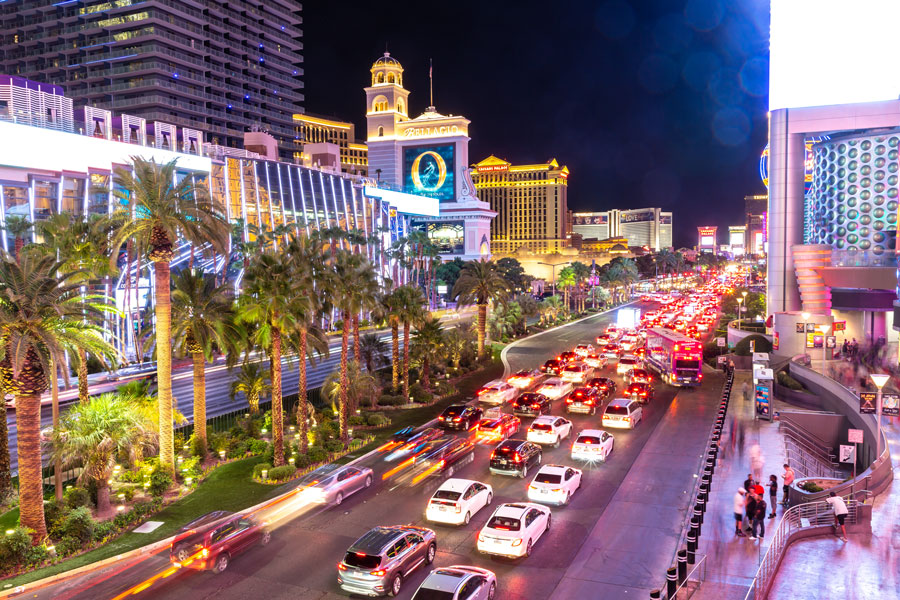
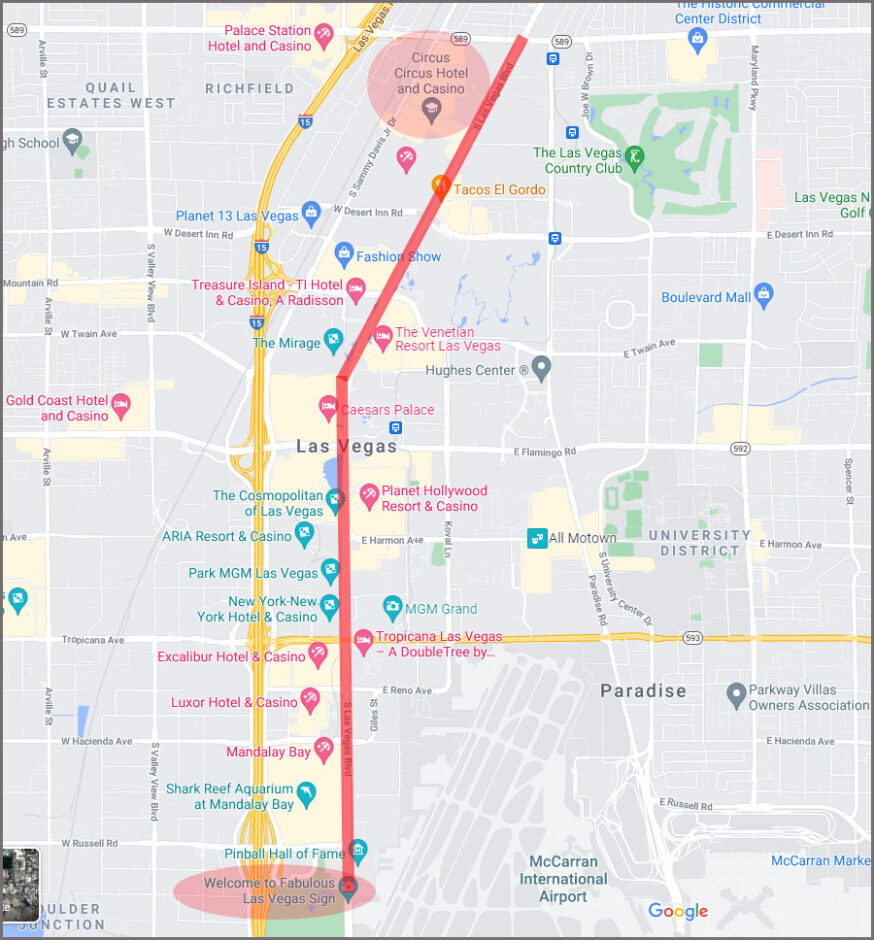
The Las Vegas Strip is the stretch of South Las Vegas Boulevard in Clark County, Nevada, known for its concentration of resort hotels and casinos. Also known simply as “The Strip,” it extends roughly between Russell Road near the “Welcome to Fabulous Las Vegas” sign and Sahara Avenue, and is approximately 4.2 miles long. Although it is commonly referred to as part of Las Vegas, the Strip is actually located south of the Las Vegas city limits in the unincorporated towns of Paradise and Winchester.
Home to distinctive architecture and many of the world’s largest and most recognizable hotels, casinos, resorts, restaurants, and entertainment venues, the Las Vegas Strip has become one of the most iconic tourist destinations in the world and a major force in the regional economy.
Named by Los Angeles police officer and businessman Guy McAfee after his hometown’s Sunset Strip, the first casino-resort on what would later become the Las Vegas Strip was the El Rancho Vegas, which opened with 63 rooms on April 3, 1941. Its success helped inspire additional development along the corridor.
That early momentum led to the opening of a second hotel on the future Strip, the Hotel Last Frontier in 1942, followed by other notable resorts including the Flamingo in 1946, the Desert Inn in 1950, and Caesars Palace in 1966. Over time, the resorts along the Strip grew larger and more elaborate, helping transform the area into an internationally recognized entertainment district.
The opening of the International Hotel in 1969, with 1,512 rooms, helped usher in the era of large-scale resort development. It was followed by the MGM Grand Hotel and Casino in 1973, one of the largest hotels in the world at the time with 2,084 rooms.
The opening of The Mirage in 1989 marked a major turning point in the modern Las Vegas experience. With its tropical landscaping, erupting volcano attraction, fine dining, and headline entertainment such as Siegfried & Roy, the resort helped set a new standard for themed mega-resorts. During the 1990s, numerous additional properties opened, including themed destinations such as Luxor, Excalibur, Mandalay Bay, and Bellagio.
With the opening of resorts such as Bellagio, Venetian, Palazzo, Wynn, and Encore, the Strip increasingly shifted toward the luxury segment through the 2000s. High-end dining, retail, spas, and nightlife became major attractions alongside gaming, and residential condominium developments also began appearing along the corridor. Gaming nevertheless remained a central draw, with Strip casinos generating more than $10.3 billion in gaming revenue in 2019, while the Las Vegas area welcomed more than 42.5 million visitors that same year.
In addition to its major resorts, the Las Vegas Strip is home to numerous attractions, including M&M’s World, Adventuredome, and Fashion Show Mall. Beginning in the mid-1990s, the Strip also became a major destination for New Year’s Eve celebrations. It remains well known for its lounges, theaters, showrooms, and nightclubs, as well as the many notable performers who have appeared there over the years.
If you are considering relocating in or around the Henderson area, our company would be delighted to help you find your way or pick the best place to settle in or find your dream home. Please give us a call at 702.376.7379 so we can answer any questions you may have.