





Rental ApplicationTenant LoginMarket UpdatesCall Us:702-376-7379


Search results for : NFL

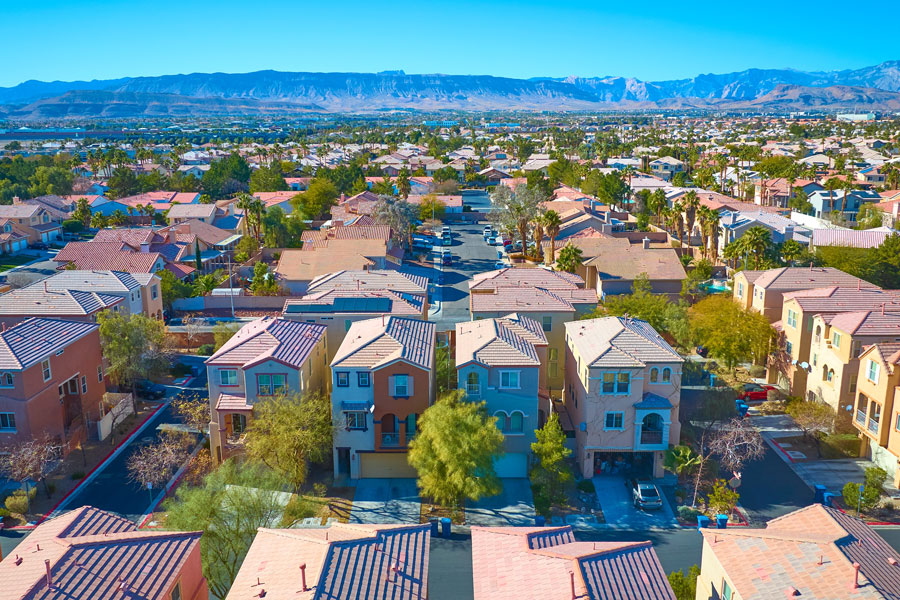
Aerial Suburban Las Vegas with Desert and Skyline at Sunset

More Rentals, More Choices: Las Vegas Inventory Surge Shifts Market Balance

LAS VEGAS, NV – A growing number of rental listings across Las Vegas are beginning to reshape the local housing landscape, giving tenants more choices while placing increased pressure on landlords to remain competitive.

New data and on-the-ground market activity suggest that rental inventory has expanded notably in recent months, contributing to a shift away from the tight, landlord-favored conditions that defined much of the post-pandemic period.

Inventory Growth Is Driving a Market Shift

According to our April 2026 Monthly Las Vegas Rental Report, the number of available rental units has been trending upward, even as leasing activity remains strong.

The report highlights a key dynamic:

  • More rental listings are entering the market
  • At the same time, tenant demand remains active
  • The result is a more balanced and competitive environment

Data from Las Vegas REALTORS® shows that while average rents declined modestly by 1.9 percent month-over-month and 4.0 percent year-over-year, the number of leased units actually increased during the same period. This combination points to a market where pricing adjustments and increased supply are helping to facilitate more transactions.

More Options for Renters

For tenants, the increase in inventory translates directly into greater flexibility. With more listings available across different property types and price points, renters are finding it easier to:

  • Compare properties
  • Negotiate lease terms
  • Secure housing without the urgency seen in previous years

Additional data from Zumper supports this trend, placing the median Las Vegas rent at approximately $1,810 per month as of April 2026, still below year-ago levels despite slight short-term fluctuations.

Why Inventory Is Increasing

Several factors appear to be contributing to the rise in available rental units:

  • New construction deliveries adding apartment supply to the market
  • Homeowners choosing to rent rather than sell amid higher interest rates
  • Regulatory shifts affecting short-term rentals, pushing some properties into the long-term market

Together, these influences are expanding the pool of available housing, particularly in suburban areas and newer developments.

What It Means for Property Owners

While demand for rental housing remains steady, the increase in supply is creating a more price-sensitive environment.

Property owners are now facing:

  • Greater competition from similar listings
  • Longer vacancy risks for overpriced units
  • Increased importance of presentation and marketing

As noted in the Shelter Realty Property Management April report, homes that are priced in line with current conditions and presented well continue to lease efficiently. However, those entering the market at aggressive price points may require adjustments to attract qualified tenants.

A More Balanced Market Emerges

The latest data suggests that the Las Vegas rental market is not weakening, but rather normalizing. After several years of rapid rent growth and limited availability, the current environment reflects a healthier balance between supply and demand. Renters are benefiting from increased choice, while landlords must adapt to a more competitive landscape. If current trends continue, this shift toward equilibrium could define the Las Vegas rental market throughout the remainder of 2026.

Data sources: Las Vegas REALTORS® MLS rental market data (March 2026), Zumper Las Vegas rent research (April 2026), and Shelter Realty April 2026 Rental Market Report.

Shelter Realty Property Management specializes in the areas of HendersonLas Vegas and North Las Vegas, NV. Feel free to give us a call at 702.376.7379 so we can answer any questions you may have.

Corporate Ownership of Las Vegas Homes as Lawmakers Revisit Housing

Tax Debate Targets Corporate Ownership of Las Vegas Homes as Lawmakers Revisit Housing Policy

LAS VEGAS, NV – A policy discussion taking shape in Nevada could have implications for how real estate investors structure property ownership in the Las Vegas housing market, as lawmakers examine whether a long-standing tax exemption should be revised or eliminated.

The issue centers on the growing share of homes owned by corporate entities and investment groups across Southern Nevada. Housing data referenced in multiple reports suggests that investors account for a notable portion of the region’s single-family housing stock, with estimates generally ranging from the mid-teens to around one-fifth of all homes.

Investor activity has also played a visible role in recent transaction trends. In certain periods over the past several years, analysts have found that investors represented a significant share of home purchases in the Las Vegas area, at times approaching a quarter or more of total sales volume. That level of participation has drawn attention from policymakers as affordability concerns continue across the region.

At the center of the current debate is a provision in Nevada’s tax structure that applies to certain real estate investment arrangements. According to regional reporting, some large property owners may be able to transfer or restructure holdings between affiliated entities without triggering the same level of tax exposure that would typically apply to traditional real estate transactions.

Lawmakers are now evaluating whether that framework should be adjusted. Proposals under discussion have focused on closing or narrowing the exemption, which could increase tax obligations tied to certain property transfers and generate additional public revenue.

Supporters of revisiting the policy argue that changes could help fund programs tied to housing and education, while also increasing transparency around large-scale property ownership. Others caution that any revisions must be carefully structured to avoid unintended consequences across the broader real estate market, including impacts on transaction flow, financing, and smaller-scale investors who may use similar ownership structures.

The discussion is unfolding at a time when Southern Nevada continues to face housing supply constraints. Federal and state estimates have pointed to a sizable shortfall in available affordable housing units, while elevated home prices and borrowing costs have made entry into homeownership more challenging for many residents.

At the same time, demand for rental housing remains strong, supported by ongoing population growth and economic activity in the Las Vegas Valley. That dynamic has contributed to continued investor interest in the market, particularly among those focused on long-term rental strategies.

Previous legislative efforts in Nevada have included a 2023 proposal to cap the number of homes large corporate investors could purchase annually, though the measure ultimately failed to advance amid legal and economic concerns. Lawmakers have also supported efforts to increase transparency around institutional ownership and bulk home purchases, reflecting ongoing interest in how investor activity is shaping the housing market.

Focusing on tax policy instead represents a more targeted approach, though its ultimate impact remains uncertain. Real estate analysts note that investors in the Las Vegas market range from large institutional firms to smaller local operators, and any changes to tax treatment would likely affect different groups in different ways depending on how properties are held and managed.

More broadly, housing experts continue to point out that investor activity is only one component of a larger set of market forces. Supply limitations, construction costs, migration patterns, and interest rates all play significant roles in shaping both home prices and rental demand.

As the legislative process moves forward, investors and property owners will be watching closely to see how any proposed changes are defined and implemented. While adjustments to the tax framework could influence how deals are structured, the overall direction of the Las Vegas housing market will likely continue to be driven by a combination of economic growth and ongoing supply challenges.

Shelter Realty Property Management specializes in the areas of  HendersonLas Vegas and North Las Vegas, NV. Feel free to give us a call at 702.376.7379 so we can answer any questions you may have.

Down Payment

Median Home Down Payments in Las Vegas Fall Over 18 Percent Year-Over-Year

LAS VEGAS, NV – A new report by Redfin shows that the median down payment by a homebuyer in the United States has fallen for the first time in five months, with a 1.5 percent year-over-year overall drop – falling to $64,000 – as of December 2025, the most recent month for which data is available.

However, when the country’s 38 most populous major metropolitan areas are examined individually, that amount of decreases varies wildly; in Las Vegas, for example, the median homebuyer’s down payment dropped to $34,125 in December 2025, which represents an 18.8 percent decline from the same period of time in 2024.

The down payment data referenced by Redfin is limited to transactions for which buyers took out a home mortgage.

While median home prices increased overall to a slight degree in December, down payments dropped in-part due to buyers putting down a lower percentage of the purchase price when compared to the same period of time one year before – 15.2 percent in 2025, in contrast to 16.7 percent in 2024.

Redfin Principal Economist Sheharyar Bokhari noted that home affordability issues, combined with a tight economy and high inflation, are driving buyers on a budget to look for more modest dwellings in order to save money.

Down payments may be falling in part because Americans are seeking out more affordable homes due to high prices, elevated mortgage rates and economic uncertainty,” he said. “Sellers typically prefer buyers who make large down payments because it signals financial stability, but sellers don’t have much say in today’s market. Buyers hold the negotiating power because there are more homes for sale than people who want to buy them.”

The median down payment percentage was highest in San Francisco (25 percent), San Jose (23.9 percent) and Anaheim (21.4 percent). It was lowest in Virginia Beach (3 percent), Atlanta (8.4 percent) and Las Vegas (8.4 percent).

Shelter Realty Property Management specializes in the areas of  HendersonLas Vegas and North Las Vegas, NV. Feel free to give us a call at 702.376.7379 so we can answer any questions you may have.

Movers and shakers. A lovely woman in formal attire is typing something on her laptop and drinking coffee while sitting near her male colleague in a window seat in a business class.

Exodus of Affluent California & Washington Residents Move to Las Vegas to Escape Taxes, Politics from Home States

LAS VEGAS, NV – Several Southern Nevada real estate agents are reporting that they have recently been seeing an unusually large influx of affluent residents from neighboring states such as California and Washington come to Las Vegas to escape their home states.

There are multiple factors at work that are diving this “full-scale migration of wealth” to Las Vegas, members of the Vegas real estate industry say; among them are the results of a recent election in Washington, which saw the city of Seattle elect progressive Democratic candidate Katie Wilson to the office of Mayor.

Wilson had campaigned on the promise of instituting a large number of social programs if elected, funded by a big increase on the taxes of the city’s wealthiest residents; in addition, a proposed “millionaire’s tax” in Washington was also recently endorsed by the state’s Governor, Bob Ferguson.

In addition, a capital gains tax was also implemented in Washington in 2022, with investment properties over $278,000 receiving a 7 to 10 percent charge.

The wealthy in California don’t have it any easier, either. The state has proposed a “billionaire tax” that, if passed, would force billionaires to pay out a one-time tax equal to five percent of their wealth; the bill – which if passed, would retroactively go into effect back to January 1, 2026 – is set to be voted upon in November, and has even the state’s Democratic Governor, Gavin Newsom, expressing concern.

As a result of these policies in Washington and California, Virtue Real Estate Co-Owner, Broker and CEO Darin Marques noted that he’s seen the number of rich transplants from those states to Vegas go into “overdrive” in 2025’s third quarter, with Henderson proving to be the most popular spots for these affluent out-of-state residents to relocate to.

We’ve seen it in the last 90 days really,” he said. “Starting in about September, we all of a sudden started seeing all these people from Seattle and it’s just grown since then.”

Ivan Sher of IS LUXURY Real Estate said that he’s also seen a large bump in the number of wealthy transplants recently.

We’re seeing a noticeable influx of high-net-worth buyers from Washington and California coming to Las Vegas, and a big driver is tax policy,” he said. “But it’s not just about taxes. Vegas also offers a compelling lifestyle. As proposals shift in those states, people are proactively positioning themselves in markets like Nevada where the tax environment is more predictable and the quality of life is strong.”

Shelter Realty Property Management specializes in the areas of  HendersonLas Vegas and North Las Vegas, NV. Feel free to give us a call at 702.376.7379 so we can answer any questions you may have.

North Las Vegas

Developer Purchases Over 18 Acres for Housing Project Opposed by Neighboring Residents

LAS VEGAS, NV – Richmond American Homes officially closed in late January on the purchase of 18.4 acres of rural-area land for a Las Vegas housing project that has raised the ire of residents in neighboring communities who fear it will have a detrimental impact upon their quiet lifestyles.

The developer paid a reported $23.25 million for the southwest valley property, located just south of Blue Diamond Road at Tenaya Way, which will be home to an upcoming 99-lot subdivision that was approved by the Clark County Planning Commission in December 2025, despite strong opposition from locals.

Multiple people in neighboring areas who are worried that the Richmond American Homes project will bring an influx of traffic into their quiet communities, many of which consist of homes on large plots of land whose owners raise animals such as horses and chickens.

Notable among the concerned and vocal critics of the Richmond American Homes project is the magician Teller – one-half of the famous comedy magic duo and longtime Vegas headliners Penn & Teller – who has called the area home for nearly thirty years.

The area where part of Richmond American’s project is to be built is a designated Rural Neighborhood Preservation zone, which prohibits suburban-style housing with multiple homes in tight vicinity of each other on small parcels of land.

The five-acre section of the project that is situated within that zone means that the company will be mandated to build homes on half-acre lots instead. But the remaining 14 acres, which are outside the zone, will consist of 90 houses built in a more traditional, tightly-knit suburban style.

In an attempt to appease unhappy locals, Richmond American will be implementing a Nevada Department of Transportation-approved median cut on Blue Diamond at Tenaya that would enable drivers to bypass the surrounding residential area in order to access the developer’s new housing project once it is complete.

An official start date for development of the site has not yet been set.

Shelter Realty Property Management specializes in the areas of  HendersonLas Vegas and North Las Vegas, NV. Feel free to give us a call at 702.376.7379 so we can answer any questions you may have.

Plumber

Why a Traditional Home Warranty Can End Up Costing You More; Real Example: Kitchen Sink Clog That Escalated

LAS VEGAS, NV – Many landlords assume a home warranty will save money when maintenance issues arise. Unfortunately, that is not always the case. Below is a real-world example that highlights how a traditional home warranty can actually increase costs and extend repair timelines.

A Real Example: Kitchen Sink Clog That Escalated

A tenant recently submitted a work order for a clogged kitchen sink. Our maintenance department submitted the claim to the home warranty company, and the landlord paid the standard $95 service call fee.

The home warranty selected a licensed plumber, who scheduled an appointment with the tenant. After assessing the issue, the plumber advised they could not clear the clog and requested an additional $300 to jet the line.

Once jetting began, a neighboring homeowner reported a backup in their unit. The plumber stopped work and later advised our maintenance department that the main line had collapsed, the HOA was aware of the issue, and until it was repaired, the kitchen sink could not be fixed. When asked why only the kitchen sink was affected if the main line had collapsed, the plumber was unable to provide a clear explanation.

HOA Involvement and Tenant Impact

Our maintenance department contacted the HOA, who confirmed they were aware of a main line issue and scheduled repairs for the following week. By this point, the tenant had been without use of their kitchen sink for two weeks.

We advised the tenant of their options:
• Release from the lease, or
• A rent credit

The tenant chose to stay in the home and accepted a $350 rent credit.

Conflicting Diagnoses and Additional Costs

After the HOA completed their repair, the tenant asked the HOA plumber why the work did not resolve the clogged sink. The plumber indicated that there may be a collapsed line beneath our client’s unit that would require additional repairs.

Our preferred licensed plumber reviewed the situation and advised that this diagnosis did not make sense, if a line were to collapse, all plumbing would be affected, not just the kitchen sink. He recommended inspecting the line with a camera.

The landlord authorized an additional $200 for this inspection. Once on site, our plumber determined a camera was unnecessary and instead snaked the correct clean-out line under the kitchen sink, clearing the clog within minutes. The issue was resolved immediately.

It became clear the original plumber sent by the home warranty had been working on an unrelated exterior line and was unfamiliar with the unit’s plumbing configuration.

The Final Cost Comparison

Total cost using a traditional home warranty:

  • 3 Weeks to Repair
  • $95 service call
  • $300 jetting fee
  • $250 plumbing repair
  • $350 rent credit
  • Total: $995

Total: $995

If Achosa Home Warranty had been used:

  • Preferred licensed contractor
  • Issue resolved within 24 hours
  • Total cost: $125

The Takeaway

Home warranties can be helpful, but they can also be costly, especially when they require the use of unvetted contractors and limit oversight of the repair process.

For landlords who choose to maintain a home warranty, Shelter Realty Property Management strongly recommends Achosa Home Warranty, as they allow the use of your contractor of choice, ensuring faster resolutions, better workmanship, and lower overall costs.

If you have questions about this situation or would like to learn more about our property management services, please contact Shelter Realty Property Management at 702.376.7379.

Wall Street

Executive Order Signed Banning Sales of Single-Family Homes to Wall Street Investors

LAS VEGAS, NV – On Tuesday, Trump signed an executive order that bars Wall Street-backed investors from purchasing and owning single-family homes, a part of his stated efforts to address affordability issues in the United States.

Buying and owning a home has long been considered the pinnacle of the American dream and a way for families to invest and build lifetime wealth,” the text in Trump’s order reads. “But because of the recent high inflation and interest rates caused by the previous administration, that American dream has been increasingly out of reach for too many of our citizens, especially first-time homebuyers.”

The President had called for such a ban earlier this month in a post he made to his Truth Social platform.

Trump’s executive order noted that “large institutional investors” – the exact definition of which will be developed by Treasury Secretary Scott Bessent within 30 days, in addition to the term “single-family home” – have created unfair completion with “hardworking young families” by gobbling up a “growing share” of the country’s housing stock.

Neighborhoods and communities once controlled by middle-class American families are now run by faraway corporate interests,” Trump said. “People live in homes, not corporations.  My Administration will take decisive action to stop Wall Street from treating America’s neighborhoods like a trading floor and empower American families to own their homes.”

Members of the President’s Cabinet – in addition to Attorney General Pam Bondi and Federal Trade Commission Chair Andrew Ferguson – will develop official guidelines to prevent “providing for, approving, insuring, guaranteeing, securitizing, or facilitating the acquisition by large institutional investors” of single-family homes.

Corporate investors have been buying larger and larger amounts of homes in the United States in recent years, the majority of which being then used as rental units; this has had the effect of destabilizing the homebuying market, often pricing middle-class families out, experts say.  

Shelter Realty Property Management specializes in the areas of HendersonLas Vegas and North Las Vegas, NV. Feel free to give us a call at 702.376.7379 so we can answer any questions you may have.

Investors

Nevada Real Estate Agents, Experts, & Lawmakers React to Proposed Investor Home-Buying Ban

LAS VEGAS, NV – Las week, Donald Trump turned heads nationwide when he proposed a ban on corporate investors purchasing single-family homes in response to the current affordability crisis facing many families hoping for homeownership in recent years.

For a very long time, buying and owning a home was considered the pinnacle of the American Dream,” Trump said last week in a post on his Truth Social platform. “It was the reward for working hard, and doing the right thing, but now, because of the Record High Inflation caused by Joe Biden and the Democrats in Congress, that American Dream is increasingly out of reach for far too many people, especially younger Americans.”

It is for that reason, and much more, that I am immediately taking steps to ban large institutional investors from buying more single-family homes, and I will be calling on Congress to codify it,” the post continued. “People live in homes, not corporations. I will discuss this topic, including further Housing and Affordability proposals, and more, at my speech in Davos in two weeks.”

And while such activity has impacted the residential real estate market to wildly varying degrees across the country – entities owning 100 or more properties account for just one percent of overall single-family housing stock nationally; it has been felt to a much more disproportionate degree in areas such as Southern Nevada.

Following the end of the mid-2000’s recession, nearly 500,000 homes have been purchased in the Las Vegas Valley by investors, with a recent study conducted by the University of Nevada, Las Vegas (UNLV) noting that this group – made up of mainly of Wall Street-backed companies – could own as much as 15 percent of all homes in the valley; that number increases to up to 25 percent in North Las Vegas, the report says.

Nevada real estate agents, experts, and lawmakers have reacted to Trump’s calls for an investor ban, saying that it would represent a potential “paradigm shift” if it were to take place.

It is past time that we ban large institutional investors from buying up our housing stock and driving up prices for families,” U.S. Rep. Dina Titus (D-Nevada) said in a post on X, formerly known as Twitter. “I have been pushing for this at the federal level for years and recently testified before the Nevada State Legislature about my work on this issue. Let’s get this done.”

I’ve been sounding the alarm for months as Wall Street drives up housing costs for Nevada families. If the President is serious about addressing this crisis, the solution is already on the table,” said U.S. Rep. Steven Horsford (D-Nevada) on X.

It’s about time someone tried to do something,” said Las Vegas-area real estate agent Steve Hawks. “Hopefully now this puts more of a spotlight onto what’s going on, and Vegas has been hit the hardest by these hedge funds and corporate landlords.”

Director of UNLV’s Lied Center for Real Estate, Shawn McCoy, said that more research is needed in order to access how much impact corporate investment is affecting the affordability concerns currently plaguing the overall national housing market; however, he confirmed that Southern Nevada is indeed one of the hardest-hit in that regard in the entire country.

It remains difficult to distinguish between the small local investors from larger corporate buyers. As a result, housing researchers do not have a complete picture of the true extent of large-scale corporate ownership. And that distinction is critical when evaluating policy to restrict certain portions of investor purchases,” he said. “Las Vegas is a standout, investor activity in Las Vegas exceeds the national average and our report ranked Las Vegas amongst the top three metros in the country.”

Shelter Realty Property Management specializes in the areas of HendersonLas Vegas and North Las Vegas, NV. Feel free to give us a call at 702.376.7379 so we can answer any questions you may have.

Number of Las Vegas Homes Now Owned by Investors Now at Nearly 100,000

Feds Look to Ban Single-Family Home Purchases by Large Corporate Investors

LAS VEGAS, NV – In response to ongoing home affordability issues in the United States fueled by large, Wall Street-backed investors snapping up houses in large numbers across the nation to use as rentals, President Donald Trump announced that his administration will attempt to ban such activity going forward.

On Trump’s social media platform, Truth Social, the Republican president outlined his plan to work with Congress on preventing corporate investors from further entrenching themselves into the residential real estate market – while also taking shots at his predecessor, Joe Biden, and the Democratic Party – and said that he would further speak on the matter at the Davos World Economic Forum in Switzerland later this month.

For a very long time, buying and owning a home was considered the pinnacle of the American Dream,” Trump said in his Truth Social post. “It was the reward for working hard, and doing the right thing, but now, because of the Record High Inflation caused by Joe Biden and the Democrats in Congress, that American Dream is increasingly out of reach for far too many people, especially younger Americans.”

Trump called upon the assistance on Congress in making the corporate ban into law in order to help make housing more affordable for Americans, and noted that he would be revealing further housing proposals at the upcoming World Economic Forum.

It is for that reason, and much more, that I am immediately taking steps to ban large institutional investors from buying more single-family homes, and I will be calling on Congress to codify it,” he said. “People live in homes, not corporations. I will discuss this topic, including further Housing and Affordability proposals, and more, at my speech in Davos in two weeks.”

Prices of homes jumped to record-highs during COVID-19; since the end of the pandemic, costs have lowered but nonetheless remain above the norm – as have mortgage rates – with the median sale price of a single-family home in 2025 coming in at $410,800.

Shelter Realty Property Management specializes in the areas of  HendersonLas Vegas and North Las Vegas, NV. Feel free to give us a call at 702.376.7379 so we can answer any questions you may have.

Las Vegas housing project near rural

Controversial Housing Project Receives Clark County’s Final Approval to Begin Construction

LAS VEGAS, NV – A proposed housing project located in a rural part of the southwestern Las Vegas Valley that has sparked controversy among its neighboring communities has received final approval from the Clark County Board of Commissioners to begin construction.

Final plans by Richmond American Homes to build a 99-lot subdivision on 19 acres south of Blue Diamond Road at Tenaya Way were approved by the Planning Commission on Wednesday. This development was much to the chagrin of multiple people in neighboring areas who are worried that the project will bring an influx of traffic into their quiet communities, many of which consist of homes on large plots of land and whose owners raise animals such as horses and chickens.

Notable among the concerned and vocal critics of the Richmond American Homes project is the magician Teller – one-half of the famous comedy magic duo and longtime Vegas headliners Penn & Teller – who has called the area home for nearly three decades.

The area where part of Richmond American’s project is to be built is a designated Rural Neighborhood Preservation zone, which prohibits suburban-style housing with multiple homes in tight vicinity of each other on small parcels of land. The five-acre section of the project that is situated within that zone means that the company will be mandated to build homes on half-acre lots instead. But the remaining 14 acres, which are outside the zone, will consist of 90 houses built in a more traditional, tightly-knit suburban style.

In an attempt to appease the engaged locals, Richmond American will be implementing a Department of Transportation-approved median cut on Blue Diamond at Tenaya that would enable drivers to bypass the surrounding residential area in order to access the developer’s new housing project once it is complete.

However, it remains to be seen if this will be enough for the neighboring communities, who have been especially vocal at Clark County Board meetings in their disapproval of the project.

Richmond American has not yet announced a start date for development of the housing project.

Shelter Realty Property Management specializes in the areas of  HendersonLas Vegas and North Las Vegas, NV. Feel free to give us a call at 702.376.7379 so we can answer any questions you may have.

Rent Ajax9

Which Vegas Neighborhoods Are Currently Experiencing Spikes or Drops in One-Bedroom Rent?

LAS VEGAS, NV – There are several neighborhoods in the Las Vegas Valley where rents on one-bedroom apartments are spiking, while there are others where that cost is steadily dropping, signifying that the current market is in a state of intense flux, according to a new report by online rental platform Zumper.

As for where the cost of housing is rising at the moment, in Winchester – located east of the Las Vegas Strip – rents on one-bedroom units this past October increased 12.3 percent when compared to the same period of time one year prior, making the neighborhood the second most expensive in the valley with a median rent of $1,460 a month.

North Las Vegas – which has a shortage of one-bedroom apartments in that municipality when compared to overall demand – also experienced an increase in rents, in this case by 15 percent year-over-year, with the median currently sitting at $1,300 per month.

However, when all bedroom types are taken into account, said Crystal Chen – one of the co-authors of the Zumper report – rents in North Las Vegas are actually slightly down when compared to one year ago.

One-bedroom units are significantly less common in (North Las Vegas), there are currently only about 30 active one-bedroom listings compared to roughly 270 three-bedrooms,” she said. “Since North Las Vegas has a higher concentration of larger three- and four-bedroom homes, the smaller-unit data tends to be more volatile and less representative of overall trends. When you look across all bedroom types, rents in North Las Vegas are actually down about 2 percent year-over-year.”

But Paradise clocks in at the single most expensive place in the valley when it comes to one-bedroom prices, with the median rent now being $1,510; this represents an increase of 4.1 percent year-over-year, which is likely influenced by the neighborhood’s close vicinity to the Las Vegas Strip.

In contrast, the neighborhoods that saw the largest decreases in one-bedroom rents in October when compared to last year were Spring Valley with 5.7 percent year-over-year, for a median of $1,320; the city of Las Vegas, down 4.2 percent to $1,150; and Henderson, which lowered 4.1 percent to $1,420.

Shelter Realty Property Management specializes in the areas of HendersonLas Vegas and North Las Vegas, NV. Feel free to give us a call at 702.376.7379 so we can answer any questions you may have.

Woman standing inside a property holdinjg a folder or clipboard.

Top Questions to Ask Before Signing a Property Management Contract in Las Vegas

LAS VEGAS, NV – Signing a property management contract is one of the most significant decisions a landlord or real estate investor can make. Whether you own a single rental home or a portfolio of residential properties, your relationship with a property manager such as Shelter Realty Property Management directly influences how well your assets perform. In a market like Las Vegas, where tenant turnover, legal regulations and maintenance demands can shift quickly, it is essential to understand every part of the agreement before committing.

Most landlords focus on cost alone, but a management agreement in Nevada involves far more than monthly fees. Contract length, termination clauses, liability and insurance requirements, the scope of services and expectations for communication all determine the effectiveness of the relationship. Asking the right questions helps protect your investments, reduces risk and ensures the property management services provided by Shelter Realty Property Management align with your long-term goals.

Why the Contract Matters for Las Vegas Landlords and Investors

A property management contract is a binding document that outlines how a property will be managed day-to-day. It establishes responsibilities for rent collection, tenant management services, property maintenance services, financial reporting and dispute resolution. Whether you are engaging professional property management for residential or commercial property management needs, the agreement forms the basis for accountability and performance.

Las Vegas is a competitive rental market with a strong mix of long-term tenants, short-term renters and seasonal demand. Because of this, the clarity of the contract directly affects vacancy rates, compliance risks and long-term property value. Understanding each clause helps landlords make informed decisions and avoid surprises later.

Key Questions to Ask Before Signing a Property Management Contract

Before signing a property management contract, landlords should clarify service scope, fees, communication practices, lease terms, and maintenance procedures. Understanding these key details helps prevent misunderstandings, ensures transparency, and protects long-term investment goals.

1. What Is the Contract Length and Renewal Structure?

The contract length in property management varies across Las Vegas firms. Many agreements range from six months to two years. Before signing, clarify:

  • Whether the contract renews automatically
  • Renewal notice periods
  • Options for non-renewal without penalties
  • Whether the manager allows month-to-month extensions

A shorter contract or flexible renewal is often better for landlords who want to evaluate performance before making a long-term commitment.

2. What Are the Termination Clauses in the Management Contract?

Termination clauses in a management contract are essential for risk mitigation. Ask:

  • What notice period is required to end the contract
  • Whether there are early-termination fees
  • What constitutes cause for immediate cancellation
  • How unfinished tasks are handled during termination

Understanding this protects landlords from being locked into a poorly performing partnership. It also ensures the transition to another provider of rental property management is smooth.

3. What Is Included in the Scope of Services?

The scope of services in property management should be clearly defined to prevent misunderstandings. A Las Vegas property management agreement should specify whether it includes:

These services differ between residential property management and commercial property management companies, so clarity ensures you receive the real estate management services you expect.

4. How Are Fees Structured?

Property management service fees vary widely. Ask for clear definitions of all charges, including:

  • Monthly management fees
  • Leasing fees
  • Renewal fees
  • Inspection charges
  • Accounting or administrative charges
  • Advertising costs

A transparent fee structure helps landlords avoid unexpected expenses and better evaluate the total cost of real estate management services.

5. How Does the Company Handle Property Maintenance?

Property maintenance services determine the long-term health of your investment. Ask:

  • How maintenance requests are processed
  • Whether the manager offers in-house maintenance or uses external vendors
  • Approval requirements for repairs above a certain cost
  • Emergency repair protocols
  • How often inspections are performed

Clear processes support consistent service quality and cost control.

6. What Is the Approach to Tenant Management and Communication?

Tenant management services influence tenant satisfaction and reduce turnover. Clarify:

  • How tenant complaints are handled
  • Expected response times
  • Communication channels used
  • Whether the manager offers online portals
  • How conflict or lease violations are addressed

A structured communication approach is essential in a fast-moving rental market like Las Vegas.

7. How Does the Company Screen Tenants?

Tenant screening services directly impact property performance. Ask:

  • What screening criteria are used
  • Whether background, credit and rental history checks are included
  • Who makes the final approval decision
  • Whether the process aligns with fair housing laws in Nevada

Thorough screening reduces risk and increases tenant reliability.

Additional Questions That Help Landlords Make Better Decisions

Landlords benefit from asking deeper questions about tenant screening, maintenance planning, financial expectations, and communication standards. These insights help ensure smoother operations, long-term stability, and stronger property performance.

1. What Experience Does the Company Have in the Las Vegas Market?

Las Vegas has a unique rental landscape influenced by tourism, employment patterns and property supply. Ask about:

  • Years of local experience
  • Types of properties managed
  • Typical vacancy and lease-up times

Local experience supports effective rental property management.

2. What Technology Does the Company Use?

Professional property management now relies heavily on software. Ask:

  • Whether portals exist for owners and tenants
  • Whether maintenance updates are automated
  • How payments and reporting are processed

Modern systems support efficient communication and operations.

3. What Happens When the Property Manager Assigned to My Account Changes?

Staff changes occur in any organization. Ask:

  • How transitions are handled
  • Whether owners are notified
  • How service continuity is maintained

This helps prevent disruptions in management quality.

Choosing a property manager is a strategic decision for Las Vegas landlords and investors. Asking detailed questions about the contract length, termination options, scope of services, liability, insurance and compliance requirements ensures that the agreement supports your long-term investment goals.

Understanding each part of the management agreement in Nevada empowers landlords with transparency and reduces risks associated with rental operations. A thoughtful review process leads to better outcomes, improved tenant satisfaction and stronger long-term property performance. For personalized guidance or to review your management options, feel free to contact us today.

Frequently Asked Questions

What should be included in a Las Vegas property management contract?

A contract should include services provided, fees, liability terms, maintenance procedures, reporting requirements, insurance obligations, contract length and termination clauses.

Can I terminate a property management contract early?

Yes, but termination clauses vary. Some agreements require notice periods or early termination fees. Review these details before signing.

What insurance should a property manager have?

Managers typically carry general liability and errors and omissions insurance. The contract should clarify coverage and responsibilities.

Do property managers in Nevada handle legal compliance?

Many do, but practices differ. Ask whether they manage notices, filings, fair housing compliance and eviction-related procedures.

Are maintenance costs automatically approved?

Not always. Contracts usually include approval thresholds. Clarify limits and communication processes for repairs.

Shelter Realty Property Management specializes in the areas of HendersonLas Vegas and North Las Vegas, NV. Feel free to give us a call at 702.376.7379 so we can answer any questions you may have.